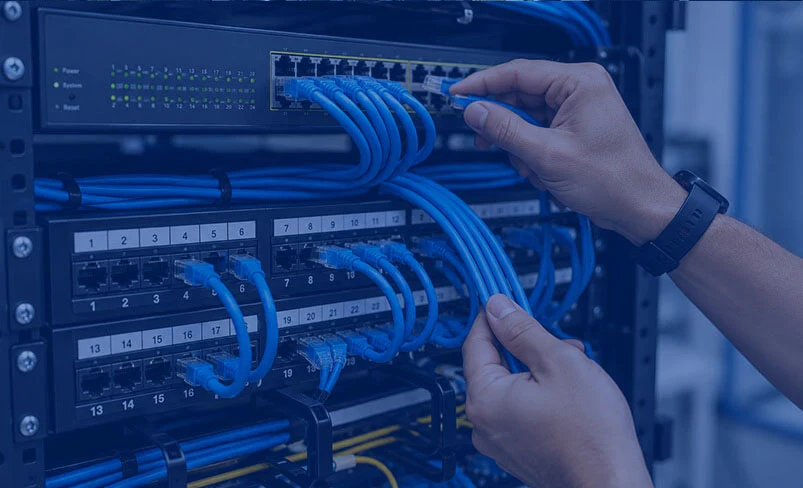
Network cabling is a fundamental component of a reliable communication infrastructure. It provides the physical connection required for computers, servers, switches, routers, access points, and other network devices to communicate and exchange data. A properly designed and installed cabling system helps deliver fast, stable, secure, and consistent network performance for businesses, offices, data centers, and other environments.There are several types of network cables, with the most commonly used options being twisted-pair cables, fiber optic cables, and coaxial cables. Each type has specific advantages and is suitable for different networking requirements.
- Twisted-Pair Cables: These cables contain pairs of insulated copper wires twisted together to reduce electromagnetic interference and improve signal quality. Cat5e, Cat6, and Cat6a are widely used for Ethernet networks. Cat6 and Cat6a provide higher bandwidth and better performance than Cat5e, making them suitable for high-speed business networks and data-intensive applications.
- Fiber Optic Cables: Fiber optic cables transmit data using light, allowing them to provide extremely high speeds, low latency, and reliable communication over long distances. They are commonly used in data centers, enterprise networks, server rooms, and connections between buildings. Fiber optics are also less affected by electromagnetic interference compared with traditional copper cabling.
- Coaxial Cables: Coaxial cables consist of a central conductor surrounded by insulation and shielding. They are commonly used for cable television, broadband internet, and certain specialized networking applications. Although they are less common in modern Ethernet networks, they remain useful in specific installations and existing infrastructure.
Network Cabling Installation and Maintenance
Professional installation is essential for achieving reliable network performance. The process involves selecting the appropriate cable type, planning cable routes, measuring cable lengths, properly terminating connectors, and testing connections. Cables should be protected from excessive bending, moisture, heat, and physical damage.
Effective cable management also plays an important role in maintaining an organized network infrastructure. Cable trays, conduits, patch panels, racks, and cable ties can help keep network cables properly arranged and easy to identify. Proper labeling makes troubleshooting and future upgrades much easier.
In conclusion, network cabling provides the physical foundation for reliable wired communication. Choosing the right cable technology, following proper installation practices, organizing cables effectively, and performing regular testing and maintenance can improve network speed, reliability, scalability, and overall performance.